
Wildomar Neighbors by Block
A block lookup works by matching sources. The parcel map gives the shape. The assessor supplies parcel facts, and the recorder adds dated transfer parties. City permit folders contribute project history. Voter information follows its own statutory path. Community groups may publish a contact or meeting notice, yet no official Wildomar member roster exists, so the table pairs each source with the channel that keeps the result lawful.
| Source | What It Shows About a Block | Access |
|---|---|---|
| Map My County | Adjacent parcel geometry, jurisdiction, districts, roads, and map layers | Free interactive GIS; not an occupant list |
| Riverside County Assessor | APN, situs, legal description, values, characteristics, and mailing destination where public | Free address or APN search; owner-name search unavailable to the general public |
| ACR Recorder | Deed parties, liens, releases, dates, document types, and legal-description clues | Free index; copies through online, mail, or office channels |
| Wildomar permit folders | Street-filed project activity and named applicants or contractors from incorporation forward | City Online Records Library; older work routes to Riverside County |
| California voter file | Approved-file voter and address fields under a permitted purpose | Not a public street browse; My Voter Status is self-service |
| City districts and community bodies | Public officials, meeting contacts, and organization-published information | Public meeting or organization channel; no universal resident roster |
An owner name is not always a current neighbor. A mailing destination is not a situs either. A permit applicant may just be a contractor or project contact. One voter may not cover a whole household. These limits are features of the records, not flaws, and they explain why a Wildomar neighbor lookup needs more than a single source.
Mapping Wildomar Neighbors by Parcel
Map My County anchors any immediate Wildomar block search. Search the address or APN. Parcel boundaries switch on with a toggle. Use Identify on the subject parcel before moving to each shared-edge or nearby polygon. Zoom, pan, layer selection, measure, print, and share are supported, but the viewer produces no verified public resident-radius report.
- Search the subject address or exact APN in Map My County and confirm the parcel shape before reading nearby lots.
- Turn on parcel boundaries, city and county boundaries, roads, ZIP, district, and recorded-map layers as needed for context.
- Click the subject parcel, then click each shared-edge or nearby polygon. Record APNs instead of guessing house numbers from the map.
- Check each APN in the assessor portal for situs, legal description, values, and published property facts. Compare mailing and situs only as separate fields.
- Use the recorder for a dated deed or transfer question. For the full named-street chain, continue to the Wildomar street directory rather than widening the block search by guesswork.
Corner parcels take special care. A lot can front a different street from the address used to find it. Map features are approximate and never a survey. Measure can show distance or area, but it cannot calculate who lives within a radius of a Wildomar parcel.
Wildomar Neighbors: APN and Situs
The APN is the county's assessment and parcel key. It links the GIS polygon to the assessor record. From there it can guide a recorder search. Situs says where the land sits, while mailing says where assessment correspondence goes. A legal description fixes the land through a lot, block, subdivision, or metes-and-bounds description, and these terms often sit together without meaning the same thing.
- APN
- The assessment or parcel number used to find one county parcel and bridge map, tax, and deed research.
- Situs address
- The physical location assigned to the parcel. It is the geographic anchor for a block search.
- Mailing address
- The destination for tax correspondence. It can be different from the parcel’s physical location.
- Legal description
- The formal land description that can survive a street-name or number change.
- Identify
- A GIS map-click action that opens the attributes of a selected parcel or feature.
Riverside's assessor portal deliberately blocks public owner-name searching. That design makes the address or APN the right first key. For a recorded transfer, search the named party and legal description in the recorder index. For a map neighbor, identify the parcel first. Never read a household from a mailing field.
Wildomar Permit Clues for Neighbors
Wildomar's permit trail has a precise jurisdiction seam. City permit files begin July 1, 2008, when incorporation took effect. The Wildomar Online Records Library groups building permits with other city records. Permit folders are alphabetized by street name. An older block project belongs to Riverside County, which held the pre-incorporation permit record.
Permits show filing and inspection dates. They can name an applicant or contractor. They can explain why parcel features changed over time. A permit cannot date a person's arrival, prove occupancy, or turn a project participant into a Wildomar neighbor. Treat each permit as a timeline clue beside the APN and deed, never as a people list.
Local quirk. Wildomar permit folders are filed alphabetically by street name. Search the city library for post-incorporation work, then switch to Riverside County for the earlier permit era.
The same date seam matters when a block looks older than the city. Wildomar's settlement predates incorporation by over a century. A blank city folder points to the county custodian.
Wildomar Neighbors and Voter Limits
California My Voter Status works as an identity-gated self-lookup. It is not a public Wildomar neighbor directory. You enter first name, last name, date of birth, and a California driver license or ID number. You can also use the last four digits of a Social Security number, with an option for having none of these. The result can display a registration location. It may also show party or language preferences, a polling place, upcoming elections, and ballot status.
The full California voter file follows a different access rule under Elections Code section 2194. An approved request may cover name, residence and mailing address, and registration date or status. It can also include party, precinct or district, and participation fields. The application itself must state the requester, beneficiary, purpose, and requested file. It must also list security measures and delivery method. Election, scholarly, journalistic, political, and governmental purposes defined by law qualify. Personal curiosity, solicitation, and harassment do not.
Files provided exclude driver license or ID data and the last four Social Security numbers. They also exclude unique identifiers and signature images. Ballot selections never appear. Safe at Home participants register confidentially with addresses withheld. Riverside Registrar of Voters sits at 2720 Gateway Drive, Riverside, CA 92507, phone 951-486-7200. The self-lookup and the state file-request rules remain separate channels.
Civic Maps for Wildomar Neighbors
Civic maps, council agendas, and staff directories put a Wildomar block in its governmental frame. They name the council member, the meeting topic, and the office to call. They do not list residents. Use the residents directory mindset elsewhere. Use civic maps to learn which body serves the parcel rather than to name every neighboring household.
Wildomar City Clerk
23873 Clinton Keith Road, Suite 110
Wildomar, CA 92595
951-677-7751 ext. 210
Wildomar History Contact
Mission Trail and Wildomar Library meeting context
Local history and community referrals
951-285-9789
The city history material credits the Wildomar Historical Society and even lists a phone number. It stops short of a member roster. The library works as a catalog and database gateway. Ask the staff there about newspapers, yearbooks, and community records instead of assuming a civic body hands out private contacts.
Wildomar Neighbor Rosters and HOA Gaps
No authoritative Wildomar umbrella neighborhood-association directory or member roster exists as a public resource. An HOA, neighborhood watch, congregation, club, or fraternal group may publish a consensual contact, a meeting notice, or a registered agent. An organization-controlled contact is still not a block roster.
California Secretary of State business records, fictitious-business-name filings, and the city business portal can surface an agent or management office when one is filed. They do not reach every member or household. The same limit applies to the Wildomar Chamber, funeral-home notices, and other community entries. Work through the organization's own channel and ask what it shares.
For a block question, the official layer usually wins when it stays narrow: parcel geometry, APN, situs, dated deed parties, permit activity, and public civic contacts. Community records serve connection and context. They cannot fill in names where the residents directory and official records stop.
Official and Commercial Neighbor Lookup
Commercial neighbor lookup tools blend parcel data, directory entries, and purchased lists. A result can look complete while quietly mixing an owner, a past resident, a relative, or a project participant into a current-neighbor claim. Official sources stay narrower. Their custodian, date, field, and limit are far easier to test.
| Source Category | Strength | Limit |
|---|---|---|
| County GIS and assessor | APN, situs, parcel shape, jurisdiction, and property facts | Does not list every person at the address or offer a general owner-name directory |
| Recorder and permit records | Dated transfers, legal descriptions, projects, and named participants | Transfer or project evidence is not proof of current household presence |
| Approved voter access | Statutory fields for an approved purpose | Not a personal block browse; protected fields and uses are limited |
| Commercial neighbor category | May join several purchased or public data sources in one display | May be stale, mislabeled, or impossible to trace to the originating record |
| Community organization | Consensual contacts, meetings, and local context | Organization scope is selective and membership information is not presumed public |
When a commercial claim matters, go back to the originating assessor, recorder, city, election, or organization channel. Compare dates and fields. Never copy a private person's details into a public note just because a result was easy to pull from a residents directory.
Privacy Limits for Wildomar Neighbors
Household members, utility customers, delivery records, and protected addresses are not ordinary public block fields. California's Safe at Home program gives a substitute mailing address. It can also support confidential voter registration. This applies to eligible survivors and specified participants who fear for their safety. It does not erase every historic record. It changes what a public search should reveal. The California Safe at Home program explains the substitute-address and confidential-registration path.
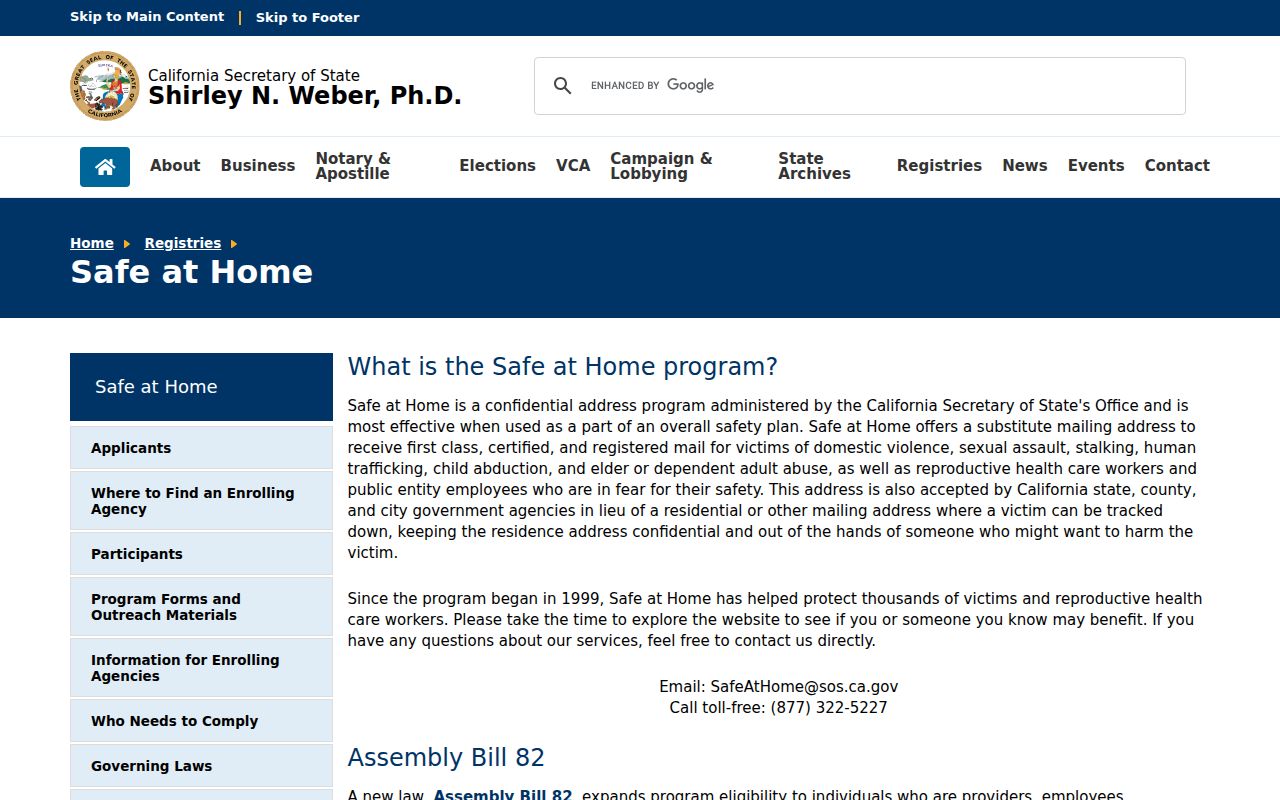
The Wildomar neighbors image illustrates the confidentiality channel. It does not show a block roster. Protected-address rules belong to the program and the record custodian. A map result cannot override them. Voter data is constrained by Elections Code section 2194. DMV personal information sits behind the federal Driver's Privacy Protection Act. Recorded documents may qualify for statutory redaction. The redaction covers Social Security numbers. Anyone seeking correction or redaction must use the custodian's process. A residents directory search cannot alter the official parcel, deed, permit, or voter record.
Lawful use. Use a Wildomar neighbor lookup for block awareness, civic contact, family reconnection, or personal safety planning. California stalking, threat, harassment, and voter-data misuse rules can apply when address information is used to watch, intimidate, or harm someone.
A careful neighbor lookup ends where the source ends. It records the parcel and the date. It names the custodian, respects a protected address, and never stretches a narrow public fact into a claim about a living person.