
Wildomar Previous Residents by Era
A Wildomar address leaves different traces as it crosses county, city, and federal record systems. Match the source to the era in question. A deed proves a transfer of recorded interest. A census page or city directory works better when you need a named household and the volume actually covers the locality. Permits date construction, not a move-in. The era table keeps those distinctions visible.
| Source | Years It Covers | Where Held | What It Shows |
|---|---|---|---|
| ACR recorder web index | January 1, 1974 to present | Riverside County ACR Self-Service | Grantor, grantee, document type, recording date, and instrument trail |
| Earlier deeds | 1893-1973; predecessor jurisdictions before 1893 | Gateway Riverside, Fitch Archives, and predecessor counties | Book/page references, legal descriptions, and earlier transfers |
| Wildomar city permits | July 1, 2008 to present | Wildomar Online Records Library | Building work, project participants, and street-file activity |
| County permits | Before July 1, 2008 | Riverside County Building and Planning records | Pre-city construction and alteration material |
| Federal census | 1900-1950 public schedules | National Archives and partner databases | Named households, relationships, ages, and birthplaces at enumeration |
| Directory collections | 1893-94; Riverside runs listed for 1927 and 1929-1934 | Library of Congress, FamilySearch, NARA, and library inquiry | Names, addresses, and household clues only if Wildomar coverage is confirmed |
| Probate, obituaries, cemetery | Probate web coverage mostly July 1994-present; cemetery from 1898; newspapers vary | Superior Court, libraries, newspapers, and Wildomar Cemetery District | Deaths, heirs, interment, and family connections |
Dates in these records are not interchangeable. The recorder index reaches back much further than the city's files. Wildomar's digital permit trail only begins with incorporation. Census pages open to the public through 1950 under the 72-year rule, yet each one is an enumeration snapshot rather than a continuous residence log. A missing directory year is a coverage question. It does not prove anyone left town. For copies, the Riverside County ACR copy guidance covers both regular and certified recorder copies. A current deed image may also carry vesting language, signatures, a return address, and the legal description that powers the next backward step.
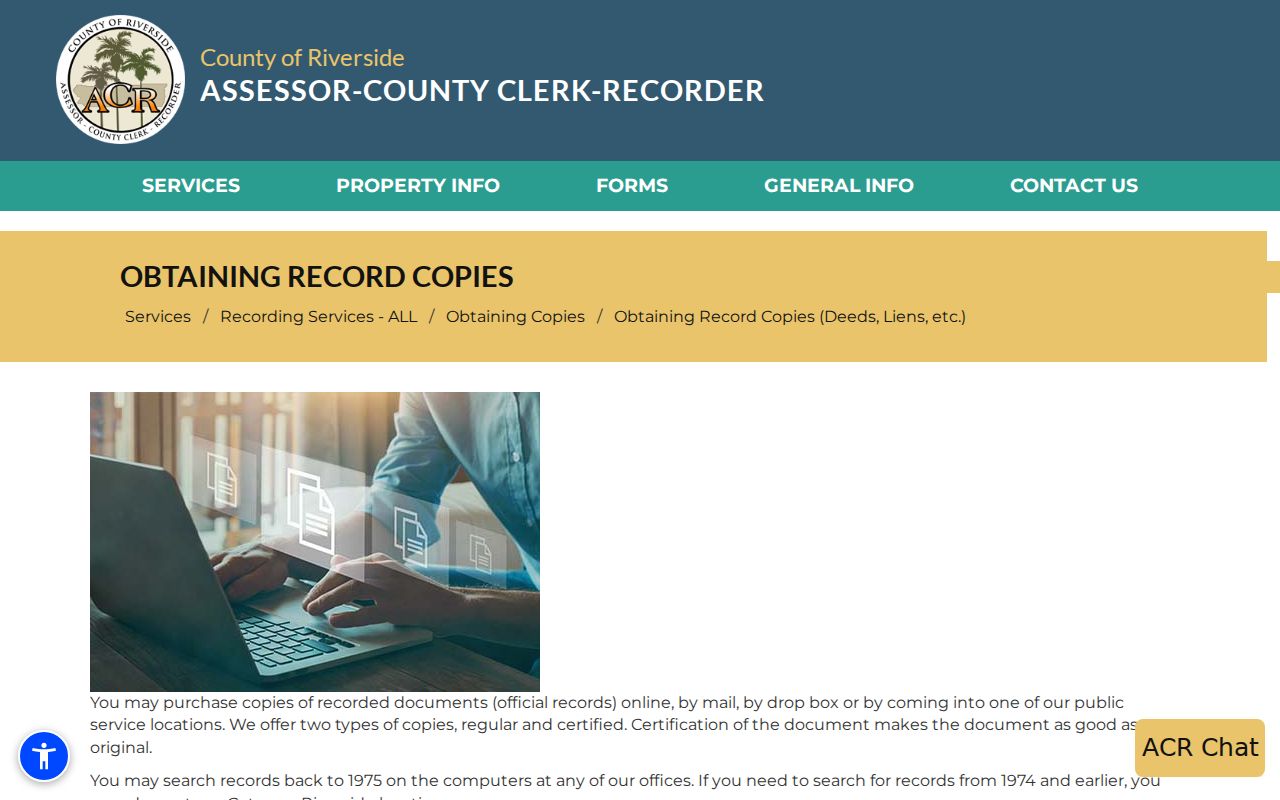
A deed image can anchor a dated ownership trail. It cannot show who actually lived there. Keep the deed's parties and land description separate from household evidence about who occupied the structure at that time.
Start a Wildomar Previous Residents Trail
Start by converting the address into an APN. Riverside County Property Search returns parcel facts from a property address or an APN. Its public assessor design offers no unrestricted owner-name directory, though. Map My County adds parcel shape, nearby lots, jurisdiction, and map layers. Together they turn a copied street string into a land reference. That reference survives a postal or naming change.
Write down the situs address, APN, subdivision or tract reference, and legal description first. Situs is the physical land. A mailing address only shows where assessment notices go. It may sit somewhere else entirely. A legal description identifies the lot, block, subdivision, or metes-and-bounds land. All three identities can point to one parcel while saying different things about a person.
Avoid broad surname searches. The recorder indexes parties, dates, document types, and legal descriptions, not street addresses. An APN keeps the assessor, GIS, permit file, and deed chain aligned. They all speak about the same land. That matters when an old address no longer matches a current one.
Deeds That Name Wildomar Past Residents
A deed chain names who transferred recorded interest. It is not a roster of occupants. Treat it as a backward ownership trail instead. Riverside ACR's recorder index offers name, recording-date, document-type, advanced-name, and document-number search modes. Enter names as LAST FIRST MI without punctuation, and keep the parcel and date window in view so namesakes do not merge.
- Confirm the current APN, situs, subdivision, and legal description in the assessor or GIS record.
- Search the current grantee or owner name in the recorder index, then match the date, document type, parcel clues, and legal description.
- Record the instrument number, recording date, buyer or grantee, seller or grantor, and the land description from the result or image.
- Search the prior seller as an earlier grantee. Repeat the same check with a narrower date window and the same land description.
- When the online range ends, carry the last known grantor, book/page or instrument reference, and legal description to Gateway Riverside or the recorder’s research staff.
Searching the online index is free. Copies can be ordered online, by mail, or in person. Fees run $8 for the first page. Each added page costs $1, and certifying the entire document costs $2. The copy guidance also describes mailed requests, in-office ordering, shipping information, and older-record research. One wrinkle deserves a question to the office. Its public index says January 1, 1974. A separate copy page describes public-service computers searching to 1975. Ask which interface applies.
- Grantor
- The party transferring the recorded interest.
- Grantee
- The party receiving the recorded interest.
- Chain of title
- The linked sequence of recorded transfers for one parcel.
- Legal description
- The land description that anchors an instrument beyond a changing street label.
- Criss-cross directory
- A reverse directory arranged by address or street, used to seek household clues rather than deed transfers.
Wildomar Previous Residents Before 1974
The recorder's web index stops at a hard line. Coverage runs from January 1, 1974 forward. Earlier documents need book, microfilm, or deed-book work. That one-year wording gap between the public index and the copy page is worth preserving rather than quietly resolving. A "no result" before the cutoff may describe the portal, not the land.
The last confirmed instrument is the handoff note. It may hold a prior grantor. It may cite a book and page, a document number, or a legal description. Those details beat endless street-address variations at Gateway Riverside. The county archives also keep permanent records, property and valuation material, and Board of Supervisors files dating to the county's 1893 organization.
For an in-person search, ACR lists 800-696-9144 and 951-486-7000, with office hours of 8 a.m. to 5 p.m. Monday through Friday. Mail requests need the document number or title and type, complete party names, an estimated recording date, and the parcel number. For pre-1976 searches without a number, staff searching is limited to two years after the estimated year. Those constraints matter. Plan the search around them. A dated APN trail serves you far better than a vague request for everyone who ever lived there.
Pre-1893 Wildomar Address History
Riverside County arrived late to its own land records. Lawmakers created it in 1893 from pieces of San Bernardino and San Diego counties. Wildomar is older than that split. City history material maps Blocks K, L, and M in January 1885, recorded with San Diego County that October. The Collier and Graham townsite was mapped in December 1885 and recorded in San Diego County on November 20, 1886. Early deeds therefore live in a predecessor county's books.
The Wildomar historical map collection includes an 1887 Wildomar map, a Town of Wildomar map, an 1890 San Diego County map, and later tract and street sheets. Maps rarely name households. They do fix lot, block, and road spellings. An early townsite reference gets reconciled there before any deed search moves into Riverside County volumes.
Wildomar began in 1886 as a railroad settlement and later moved through agricultural and suburban eras. The 1890 federal census gap is national destruction, not a local accident. Deeds, assessment material, newspapers, cemetery evidence, voter rolls, and city directory volumes bridge the years near founding. A pre-1893 result belongs in the predecessor-county question set. Don't stop at modern Riverside books.
Wildomar Permits and Past Households
Wildomar's municipal seam is exact. Incorporation took effect July 1, 2008. The city's Online Records Library holds building permits, planning projects, agendas, and related categories, with permit folders alphabetized by street name. Anything older goes to Riverside County. That single split diagnoses most blank permit searches.
A permit can date construction, alteration, inspection, or an application. It may name an owner, applicant, contractor, or project participant. It cannot prove anyone lived in the structure. Nor does a building date equal a move-in date. Use the permit to set the parcel's physical history. Then seek household evidence in a residents directory, census, newspaper, probate file, or cemetery record.
Jurisdiction seam. A Wildomar permit search stops at the city’s July 1, 2008 incorporation boundary. Route older work to Riverside County before treating the missing folder as evidence that no structure or household existed.
Current city records are not the whole trail. The assessor supplies current parcel facts, Map My County adds spatial context, and the recorder holds recorded transfers. A permit belongs beside those records, not above them.
Pair Wildomar Previous Residents With Census
Directories and census schedules carry the household half of previous-resident research. The Library of Congress digitized the A.A. Bynon and Son History and Directory of Riverside County, 1893-4. It spans 360 scanned images. FamilySearch catalogs a 1992 facsimile. NARA's circa-1930 list identifies Riverside directories for 1927 and 1929-1934. None of that guarantees a Wildomar entry. Inspect the coverage statement and locality section before quoting a name.
The FamilySearch Riverside County catalog surfaces deeds, probate, vital registers, cemetery, and church records. Related record groups appear there as well. Some images need a free account or a FamilySearch center. The catalog is a finding aid, not a present-residents directory.
The FamilySearch catalog view helps locate the next record group. Use it after a deed or census clue. It does not replace the original volume. Custodian rules still apply.
Federal census schedules at NARA Riverside are public through 1950. An index that skips a Wildomar address is not the end. Work the enumeration district. Check nearby localities too. The local library can also point to newspapers, yearbooks, telephone material, and obituary resources. A missing directory year may reflect publication coverage. It may reflect rural delivery or indexing. Or it may mean a locality filed under Elsinore rather than a move. The NARA city-directory holdings page offers a coverage lead, not proof of a Wildomar-specific run.
The NARA Riverside genealogy resources page documents the federal census and genealogy holdings. Those holdings support Wildomar previous-residents research.
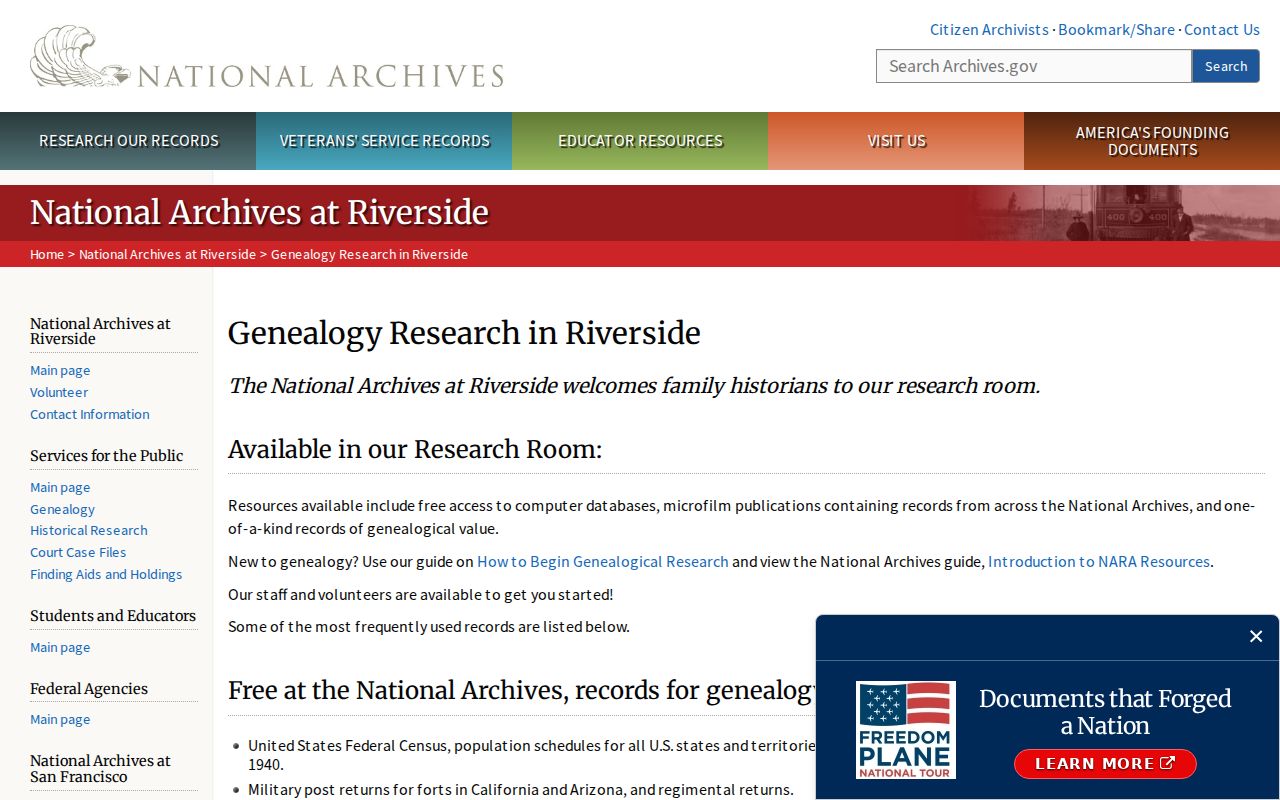
NARA's research-room resources add census and other federal context. Local coverage still needs testing against the actual volume title page and address section.
- Fix the parcel and historic address with the APN, legal description, and map.
- Confirm that a directory volume covers Wildomar, Elsinore, a rural route, or the relevant Riverside locality.
- Read the alphabetical name entry and any reverse street section, then pair it with the nearest 1900-1950 census schedule.
- Use probate, obituaries, cemetery evidence, or a later deed to bridge years without a directory or census.
Probate Clues for Wildomar Previous Residents
A prior resident's death can move the trail from household sources to probate, an obituary, or an interment record. Riverside Superior Court probate data is nearly all online from July 1994 forward, while older files may need a clerk search. A probate case can identify heirs, a personal representative, a property description, or a disposition. It rarely proves every address a person held.
The Wildomar Cemetery District dates the cemetery to 1898. Markers, interment files, obituaries, and death records meet there. The district's official information lists 951-678-2451 for direct inquiry. Wildomar Library and local newspaper sources can add an obituary or community notice. Keep a death clue private when it holds sensitive family material. Verify any transcription against the original image or custodian.
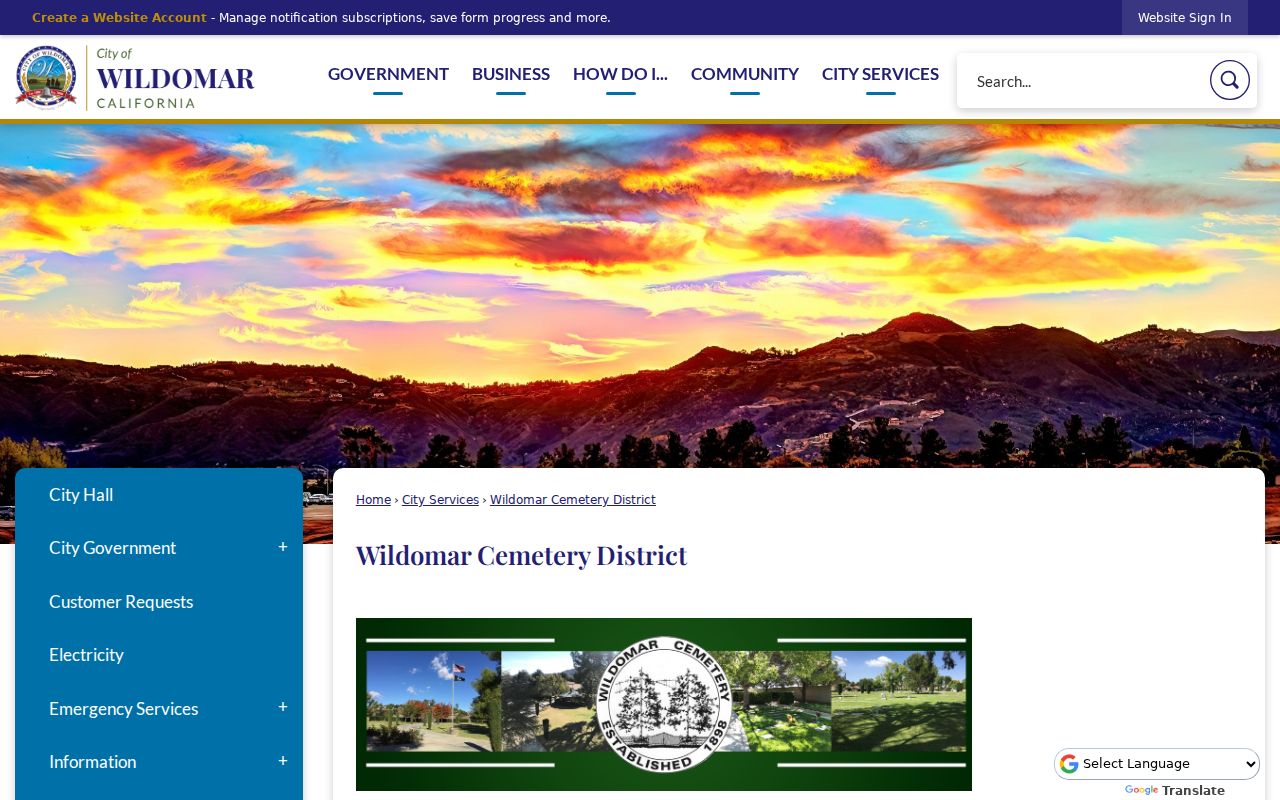
A cemetery record closes family connections a deed cannot. It still needs parcel and date anchors to keep two people with similar names apart.
| Evidence | Best Use | Limit |
|---|---|---|
| Deed or recorder index | Connects named parties to a dated land transfer | Does not prove daily occupancy |
| Permit | Dates construction or alteration and identifies project participants | Does not date a household move |
| Census or directory | Places a household or person at a covered address and time | Coverage, indexing, and address format may vary |
| Probate, obituary, or cemetery | Links death, heirs, family, and interment clues | Does not provide a complete lifetime address list |
The Wildomar Sanborn Research Gap
Wildomar poses a real challenge for map research. No authoritative catalog lists a Wildomar-specific Sanborn sheet. No complete run of Wildomar directory publishers and years appears online either. Leave that gap visible rather than papering over it. Search the Library of Congress and library catalogs under "Elsinore" or another historic locality. Treat a sheet or directory entry as Wildomar coverage only after the map, title page, or locality list confirms it. The same caution applies to street numbers. No authoritative renumbering chronology exists for the city.
A modern address may fail to match an old one. The land records then do the work. Compare the 1885-1887 townsite and tract maps. Preserve the legal description at every step. Ask the recorder or county archive about the APN and book reference. A postal lookup can confirm today's delivery form. But only the land description proves that the old and new number strings point to the same parcel.
A lawful house-history project follows a clear chain of records. Start with the current APN and deed, then trace the prior grantor. Hand off to the Gateway or an archive. Work through the city or county permit seam. Pair the residents directory with the census. Finish with probate, obituary, or cemetery corroboration. Past residents then emerge as a documented sequence of dated clues. They are no longer a guessed list of names.
Lawful use. Previous-resident research in Wildomar is appropriate for family history, estate work, and personal house history. Do not use address records to stalk, threaten, or harass a living person; California law can impose serious consequences for that conduct.