
Wildomar Resident Lookup Starts With the Question
There is no master list of Wildomar residents. Every lookup is really a choice among record custodians. The right first record depends on the question. Connecting a name to a parcel points to the assessor and recorder, a filed case points to the court, and a family event points to vital records. Checking your own registration belongs to the voter status tool. Verifying a public business or license role has its own filing system, and the coverage map keeps each question separate so a result is never mistaken for proof.
| Record | What it can confirm | Where to search | Access |
|---|---|---|---|
| Parcel assessment | APN, situs, assessment facts, and public mailing data | Riverside County Property Search | Free address/APN search; owner-name web search unavailable to the general public |
| Recorded instruments | Party names, roles, dates, types, and legal-property links | Riverside ACR recorder index | Free index; paid copies; web recorder coverage begins January 1, 1974 |
| Superior Court | Case number, filing date, category, parties, and public docket activity | Riverside Public Access portal | Case-number search free; name and document searches use paid credits or fees |
| Voter status | An authenticated voter's registration location, party, polling place, and ballot status | California My Voter Status | Free self-lookup; the broader file is limited by Elections Code section 2194 |
| Vital record | Birth, death, public marriage, or divorce event evidence | Riverside ACR or California CDPH Vital Records | Authorized and informational copy rules differ; fees apply |
| Business or license filing | Entity, agent, license status, public address role, or discipline link | California bizfile and DCA search | Basic searches are generally free; an address is not occupancy proof |
| Probate file | Decedent, petitioner, heirs, notices, and public filings where available | Riverside Superior Court | Online probate data is nearly all July 1994 forward; restrictions remain |
Use the narrowest source first. An APN links an assessor result to a deed, a case number opens a register of actions, and an event date with a parent or spouse name pins down a vital record. A My Voter Status result stays private. It belongs only to the person who authenticates, never to a public street directory search.
Two Anchors Beat One Name
Riverside records are full of namesakes. Spelling variants, initials, maiden names, and organization names add confusion. Record the exact indexed form before trying broader spellings. Name plus city is only a lead. A second anchor, like a dated address, an APN, a case number, an entity number, or a license number, makes the Wildomar resident lookup match solid.
- Write every known spelling, middle initial, former surname, approximate date, and associated place.
- Start with the question's best key. Use an address or APN for parcel work, a case number for court work, and an event date for vital work.
- Run the official index, then save the result's exact name, date, role, and record number before widening the search.
- Cross-check a second custodian. Do not merge two records on name and city alone.
- Order or inspect the original record only when the indexed result supports the right person and purpose.
- Docket
- The running case record that lists filings, dates, parties, hearings, and status. A docket entry is not the same as the full document.
- Index versus image
- An index is a finding aid with selected fields. An image or certified copy is the custodian's document, subject to access, redaction, and copy rules.
- Certified copy
- A copy formally certified by the records office. It can carry a fee and eligibility rule that does not apply to a plain index view.
- Informational copy
- A certified vital-record copy marked for information rather than identity use when the requester is not eligible for an authorized copy.
Calling a clerk makes sense for verifying a record number or confirming the right custodian. Staff cannot identify a private person for you; the source itself has to resolve the identity question.
Riverside Court Fields, Coverage, and Cost
Riverside Superior Court publishes public access instructions covering civil, criminal, family law, probate, and traffic records. The account-based portal runs in two modes. A known-case search is free. A name search costs money. A name result only returns matching case numbers and filing dates, so treat it as a lead to a case rather than a finding about guilt or present residence.
| Case Number Search | Required case number; free lookup and register of actions. |
|---|---|
| Civil Name Search | Person or organization name; paid credit. |
| Criminal or Traffic Name Search | Name search; paid access with remote limits. |
| Register of Actions | Case number; filing list, dates, and filing party. |
| Calendar | Date and court controls vary; current and future hearings extend up to seven days. |
| Documents | Case number and document selection; only permissible nonconfidential documents download. |
| Probate Notes | Case number; updated in the evening three business days before a hearing for timely-filed papers. |
Name-search credits come in set amounts. One dollar buys a single search, $3.50 buys five, $5 buys ten, $25 buys seventy-five, and $250 covers unlimited searches across 30 consecutive days. One located name unlocks ten case views. After that, another credit is needed. Documents cost $1 per page for the first five pages and $0.50 per page after that, capped at $50 per document, with access open for 30 days.
- Riverside civil coverage begins October 1991; Temecula civil begins October 1996, with small claims from September 1996.
- Family coverage is nearly all from April 1992, and probate coverage is nearly all from July 1994.
- Riverside criminal coverage begins January 1990 for felonies and January 1994 for misdemeanors.
- Mid-County criminal felony and misdemeanor coverage begins December 1996; traffic coverage varies by courthouse and category.
The Southwest Justice Center sits at 30755-D Auld Road in Murrieta. Public-viewing computers are in room 1227. Hours run 7:30 to 4 on weekdays except holidays. Viewing is free, but copies cost. Older or restricted searches use the current RI-MC002 request form, which lists $15 per name search, $0.50 per page, $40 for certification or a certified document, $32 for off-site retrieval, $15 for a certified divorce decree, and $50 for exemplification, plus postage. The form also names Genesis IND-SUN, eCourt, microfilm, microfiche, and Records Center systems. An online result can show plenty. Fields include case number, filing date, case type, court location, status, party names and roles, document titles, hearing department, probate notes, and permitted document links. Sealed, confidential, juvenile, adoption, family-law, mental-health, and victim information may be missing. The online result is not the official court record.
Recorder Syntax for a Wildomar Name
This recorder index is separate from the court portal. The Riverside County Assessor-County Clerk-Recorder name control uses LAST FIRST MI with no punctuation. A last name plus first initial widens the net. An organization is entered as spelled. The public index states that clerk documents begin January 1, 1893 and recorder documents begin January 1, 1974. The copy page also describes public-service searching to 1975. When a boundary matters, ask staff which interface or cutoff is being described. The name screen accepts several filters. Recording dates, document types, an advanced-name-search option, and modes for document number, map type, book/page, and name all narrow the search.
- + requires a word, while - excludes one.
- $ requests phonetic matching, ? stands for an uncertain letter, and * is a prefix wildcard.
- Quoted text holds a phrase, and ~ supports fuzzy or proximity behavior.
- A pipe separates alternatives in some legal-description work, while double-asterisk wildcards are documented for case number, parcel number, and legal remarks.
Use exact LAST FIRST MI before phonetic or fuzzy forms. Write down every anchor the result gives you. That means the document number, date, type, party role, book/page or legacy reference, page count, and legal description. A deed chain starts with a parcel or recent instrument, then searches the earlier seller as a grantee. Work backward from there. A street address alone is a weak historical key.
Online document copies carry a 2.15 percent card fee. Processing averages 48 hours, with mailed delivery. Regular or certified copies run $8 for the first page, $1 for each added page, and $2 to certify an entire document. In-person research uses an "In Office" choice, an SST order number, and an appointment. Mail requests need a form, document number or title and type, complete parties, an estimated recording date, and a parcel number. For a pre-1976 search without a document number, staff searching covers only two years after the estimated year, and earlier instruments require Gateway Riverside or office research.
Vital Copies Have Two Access Levels
California splits vital copies into two kinds. An authorized certified copy works for identity purposes. Health and Safety Code sections 103525 and 103526 define who qualifies. Everyone else can usually buy a certified informational copy. It carries a marking that it cannot establish identity. Authorized requests need a sworn statement. Mail one in, and notarization generally follows. Confidential-marriage copies stay with spouses or a court order under Family Code section 509. Under Family Code section 9200, adoption records remain sealed.
The 2026 CDPH fee page posts the retained search fees. Note: CDPH keeps the fee even when the search turns up no record.
- Birth certificate: $31.
- Death certificate: $26.
- Public marriage certificate: $19.
- Dissolution certificate: $18.
- Fetal death certificate: $23.
- Stillbirth certificate: $28.
Filling out a CDPH vital record request takes some patience. You work through a long list of vital application fields. Expect to give your own name, address, and phone. Add the copy count and record type. The form also asks for the registrant or decedent name. Spouse or birth names go on it too. The event date and place are part of it. Birth and death requests add the parents' names. You must state your purpose. Pick your relationship and eligibility, and choose an authorized or informational copy. A sworn statement, your signature, and a notary acknowledgment round it out when required. Payment goes by check or money order to CDPH Vital Records. Cash is not accepted. No record image arrives by email or fax through any direct electronic portal.
Coverage has limits. CDPH holds public-marriage records for 1905-1999 and 2008-2023, and gaps belong to the county recorder. A divorce certificate is only an Abstract, not the Superior Court decree itself. Treat historical indexes as finding aids, never as authority to receive an authorized copy.
My Voter Status and Wildomar Lookup Limits
California My Voter Status is a locked front door that only opens for the voter. Enter a first name, last name, and date of birth. Also provide either a California driver license or ID number or the last four digits of a Social Security number, with a checkbox for those holding neither. The result may show the registration location. Party and language preferences, polling place, upcoming elections, and ballot status may appear too. Close the browser afterward.
No one can type a Wildomar street into that form and list voters there. Elections Code section 2194 confines broader file access to approved election, scholarly, journalistic, political, or governmental purposes. The application itself names the applicant and beneficiary. It also states the purpose and the requested statewide, county, active, inactive, history, or district data, plus delivery, security measures, storage, and the authorized signer. A statewide file runs $100 on the state page. Up to ten specifically named voters cost $30 each, capped at $100. Each needs a full name, date of birth, county, and residence address. County charges vary.
An approved file can hold name, date of birth, registration date and status, residence and mailing addresses, precinct and district, contact details, and party preference where present. Optional history covers election type, date, and voting method, never ballot choices. Driver license or ID data stays out. The last four Social Security numbers, unique identifiers, and signature images stay out too. Active data arrives automatically; inactive, participation, and district files require selection.
Safe at Home participants can register confidentially behind a substitute mailing address. The program shields an eligible survivor's address, though it does not erase every historical record. An inactive status alone never proves someone left Wildomar on a given date.
Heirs, Classmates, and Birth Parents
Different people-finding questions call for different evidence. Heir work starts with a Riverside probate case. From there, compare petition or notice names against an obituary, a deed transfer, and any public filing naming the relationship. Probate web coverage runs almost entirely from July 1994 forward, and document access can be restricted. A deed may show a later transfer to an heir, yet it proves nothing about the family tie on its own.
A former classmate search leans on school yearbooks, library catalogs, alumni material, and newspaper coverage. No public district alumni directory should be presumed. A yearbook name plus graduation context makes a solid anchor, while any separate identity question still needs a later official record. For historical directory collection questions, the Wildomar Directory Book keeps the 1893 Riverside volume, NARA years, and research gaps distinct.
Birth parent searches hit a hard wall: California adoption records are sealed. The route runs through CDSS, CDPH, or court-authorized adoption-information procedures, not a public name lookup. A vital index or family story can point to a lead, but neither opens a sealed file nor replaces the eligibility process.
Business and License Cross-Checks
A business record can help tell apart two Wildomar residents who share a name. It has limits, though. A business address is not a home address. The California Secretary of State's bizfile system starts with a basic control. It is Search by name or file number. Advanced search adds more filters. You can narrow by entity type or group. You can also narrow by status, an initial-filing date range, and publicly traded disclosure. Enter a corporation number without its leading C. Basic results cap at the 500 closest matches unless you narrow the query.
A detail page can be rich. It may show legal name and number. It may also show entity type, jurisdiction, status, and formation or registration date. Principal and mailing addresses appear, along with the agent and filed Statements of Information. Basic search needs no account. Filing, order, and certificate actions do require one. The California Department of Consumer Affairs search takes Boards and Bureaus, License Type, License Number, Business Name, first and last name, Registry Number, and Advanced Search controls. Results can show current or expired status. They can also show public suspension, revocation, or discipline where the board supplies it.
For a Wildomar business question, line up several records. Compare the state entity. Also compare the city registration, the county fictitious-business-name filing, and any relevant license number. Cross-match numbers, dates, and labeled address roles rather than names alone. Open the California business-entity search for the official form and source fields.
A bizfile result can support an entity affiliation or filing history. It cannot establish that the listed agent or principal lives at the labeled address.
Other Official Lookups Have Narrow Uses
County custody tools and state registries each answer a narrow question. Neither is a general Wildomar resident list. The California Megan's Law website offers name or map and address search modes. A result can include identity, photograph, and descriptors. It can also list offense or category information. An approximate or specific location appears where authorized. Statutory restrictions apply, and no result may ever be used to harass a person.
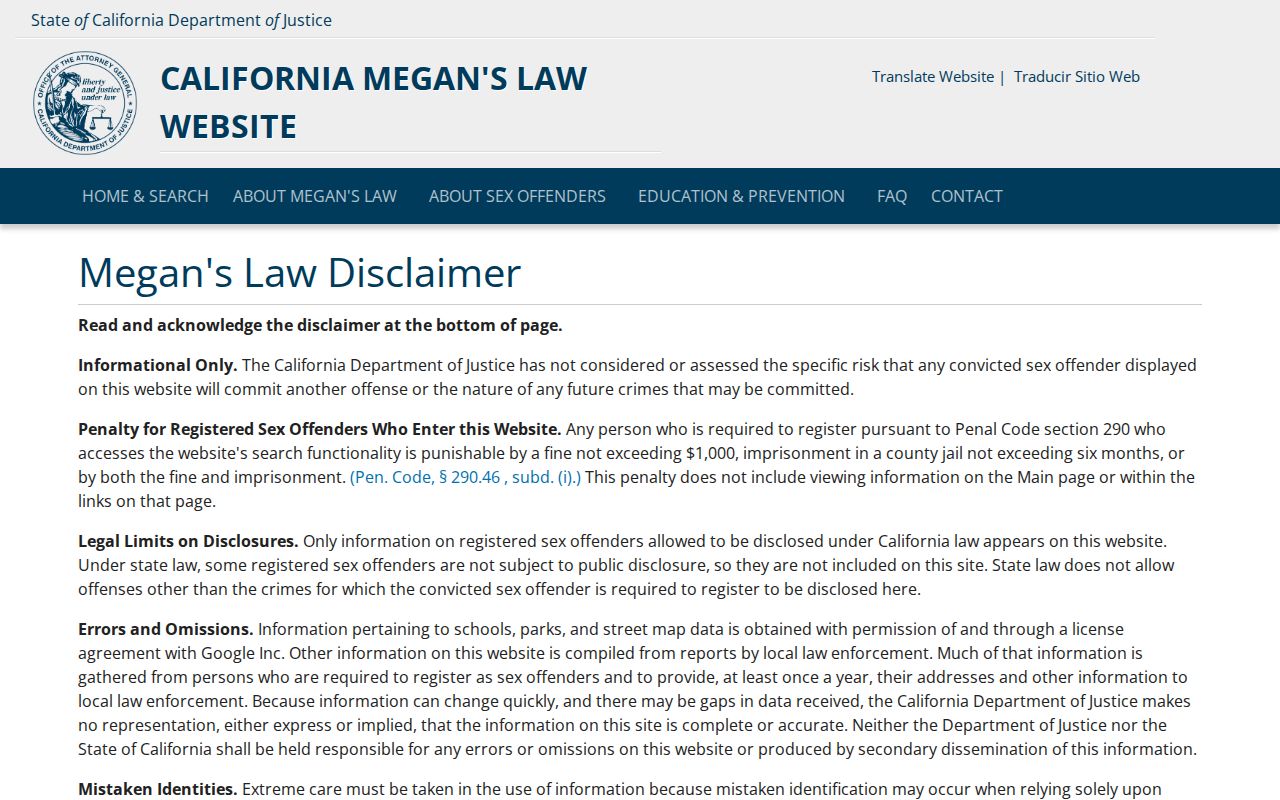
A registry image is just a search surface, never a Wildomar-specific result. Keep the source warning in mind. Confirm anything with the originating agency.
The Riverside County Sheriff inmate information system offers two ways in. A Booking Number works on its own. Otherwise Last Name is mandatory. Optional First Name, Date of Birth, and Sex fields narrow the results. The system covers current or recent custody status. The Sheriff cautions against relying on it for legal action. A live result is not a disposition. Turn to the court record or the Sheriff Records Bureau for an official fact.
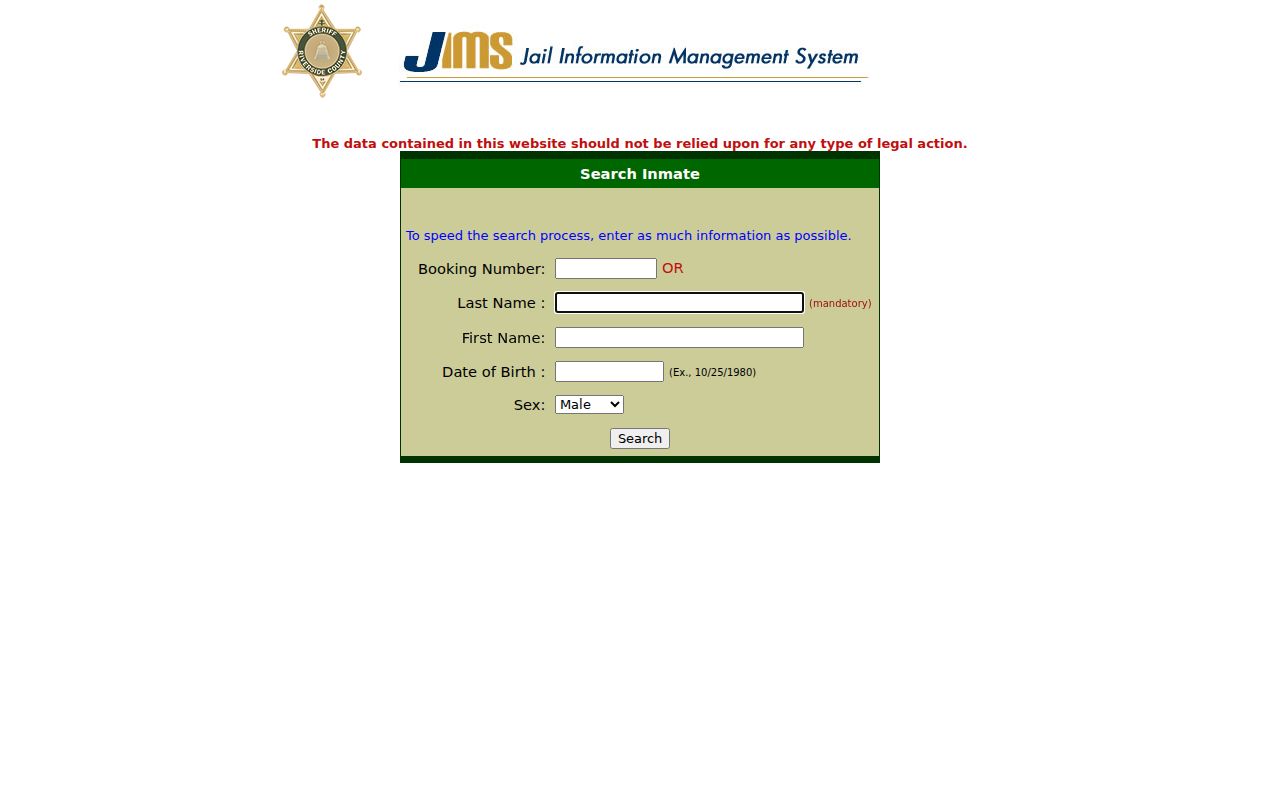
Each of these lookups serves one narrow purpose. A booking log, registry entry, or license record can confirm a single fact, but it cannot settle identity, family ties, address history, or where someone lives in Wildomar today.
Wildomar Resident Lookup When Portals End
When an index runs dry, ask the custodian. Wildomar's online public-record request form covers the essentials. It takes a requestor name, grouped address, required email, and contact number. Property address, date range, specific details, and delivery choice round out the form, with pickup copies, email, or on-site inspection as the options. The City Clerk determines availability within ten days. Unusual CPRA circumstances can extend the written determination by up to fourteen days. The city need not create a new list or disclose exempt material. Copy fees can apply.
The California Public Records Act, recodified at Government Code sections 7920.000 and following, rewards requests that name the record type, date range, address or APN, known parties, and preferred format. Route each question to its custodian. The city holds agendas, permits, ordinances, and resolutions. Riverside ACR keeps deeds and vital records. Superior Court holds probate and case files, the Registrar of Voters holds election data, and police or accident reports belong with the Riverside County Sheriff rather than the city.
California's DROP mechanism opened consumer submissions January 1, 2026. The official DROP information explains that one verified California-resident request can reach more than 600 active registered data brokers. Beginning August 1, 2026, brokers must retrieve and process requests at least every 45 days using hashed identifiers and delete any nonexempt matched data. A DROP ID checks request status. DROP leaves deeds, court files, voter records, and other official public records untouched.
| Source type | Strength | Limit to keep in view |
|---|---|---|
| Official custodian | Named fields, coverage, record number, and a path to the original | Eligibility, redaction, fees, and gaps still apply |
| Commercial directory product | May offer a fast lead from mixed datasets | Names can be merged, corrections can lag, and provenance can be unclear |
| Two-source check | Combines a dated identity anchor with a second record | Still cannot overcome a sealed, confidential, or missing record |
Lawful use. A Wildomar resident lookup is for personal, lawful research and source verification. California stalking law, Penal Code section 646.9, harassment rules, Elections Code limits, and address-confidentiality protections still apply. Do not use a record to stalk, harass, intimidate, or harm another person.
Take any disputed fact straight to the office that keeps the record. A residents directory clue can open the search, but only the custodian controls the official record, the correction route, and its lawful release.